Sunday, April 18, 2010

Bel Canto is a rewarding read on so many levels I can't begin to cover them all. I think what stayed with me the longest is that it is about boundaries and barriers and about how people cross them (or ignore them) is what defines them.

The book opens at the end of a private performance by Roxanne Coss, a renowned opera soprano's, for a host of dignitaries at the lavish mansion of a South American vice-president in celebration of the birthday of Mr. Hosokawa. He was an opera fanatic and the founder and chairman of Japan's largest electronics corporation and the hope was that he would build a factory in the host company.

Bel CantoThe first boundary is crossed when the lights go out and the accompanist leans over and sneaks a 'strong and passionate' kiss onto Roxanne's lips and thereby crosses over, doing what 'all the men and women in the room...collectively' desire.

We soon learn the lights were extinguished by a band of marauding revolutionaries who look to kidnap the president who is not even in attendance at the event. A stalemate ensues that allows both the terrorists and the hostages opportunity to enjoy the music that Roxanne and others provide--a music that seems to cross the boundaries of the dangers present and unite everyone in a beautiful, harmonious existence.

Ann Patchett’s liquid language and unique tale about a likely but unlikely scenario as both the bad guys and the good guys become hostage to the rapture of music; hostages fall in love with their captors and untouchable opera divas fall in love with their admirers. It is as deceiving in its simplicity as it is simple in its message.

Bel Canto is a story about what constitutes barriers, what nourishes them and what happens on either side. There are many. First, there is the kiss. Then there is the wall that divides the mansion from the town--the dignitaries from the working class. There are the guns that separate the hostages from the renegades. There is the barrier of language among the 38 hostages and their captors. There are the barriers that the large corporations and governments put on their employees and citizens. There are the cultural barriers that forbid young female revolutionaries to fall in love with corporate interpreters; or, American opera stars to fall in love with Japanese CEOs; or, militant generals to teach chess to their teenage foot soldiers; or, entrepreneurs to play piano for militants. All of these are lyrically crossed.

Through it all we read about the beautiful music, which brings everyone together in appreciation and we come to love Gen, Mr. Hosokawa’s interpreter, who brings everyone together in language.

But all this happens in a most unlikely world, a Camelot given temporary sustenance by circumstance--a dream that can never come true.

Thursday, February 18, 2010

Cormac McCarthy

      I am on a Cormac McCarthy kick lately. Have read The Road which I wanted to do before seeing the movie. He is a master with words--terse, unadorned style that even scorns the use of quotation marks. The Road is not even adorned with names for its characters--simply The Boy and The Father. Still, McCarthy is extremely readable. In this work the world, or at least our country, has been decimated--assumedly by a terrible war.  There are loving references to The Mother as The Father muses about the past. She was the first to succumb to the 'Bad Guys.' Now father and son are on the road struggling for survival, a warmer climate and a safe haven from just about every creature they encounter. It is a tender portrayal of love, an uplifting tale of fierce determination and a horrifying window into what could be.

        I've also finished McCarthy's first novel in his Border Trilogy--All The Pretty Horses. Same voice as well. A coming of age story about two boys who grow up in Texas on neighboring ranches in the forty's. Soon after they leave home seeking something greater than themselves they pick up a much younger boy--a mirror of themselves. Their journey brings them to the doorsteps of resentment, cruelty, greed and love and not all of them return home to talk about it.

       Cormac McCarthy was born in 1933, the third of six children, in Rhode Island. When he was four his parents moved to Knoxville TN where they continued to raise their children as Catholics. He was named Charles after his father but changed his name to Cormac ("Son of Charles") after the Irish King. Some say his parents actually changed his name. Not sure which is the case. He attended the University of Tennessee for two years then entered the Air Force for four. He returned to the University, published two stories in its literary magazine. In 1960 he moved to Chicago and worked as an auto mechanic while he wrote his first novel, "The Orchard Keeper," published in 1965 by Random House.

Friday, February 12, 2010

Tears At The Counter

She was older than I and taller. Her hair was perfect and cropped short and stroked with silver as if from an ancient Chinaman's ink brush. She wore sweats--nicer ones. Her carriage was confident and edgy, as if she were set for a fight.

I was in Florida on vacation. At the supermarket the day before, a similarly confident woman dressed down the seafood counter clerk for the way he cut their swordfish. I was next in line.

“I’m from Connecticut,” she said to me. “They know how to cut their fish.”

I’m from Michigan, I thought. This is the only way I’ve seen swordfish cut.

“And I can’t believe you charge for your lemons,” she said to him and looked at me for approval.

“They’re free at Rhodes,” she said to me.

I snuck a wink to the clerk. “But the prices are higher there.”

The humble man simply thanked her for the observation and wrapped her purchase.

Now this woman at the vet threw back her shoulders and lifted her chin.

"What kind of dog is that?” she asked the clerk, pointing to the fluff of fur on my lap.

“Havanese,” the young girl said. “Isn’t she sweet?”

“She’s quite large for a Havanese,” the woman said and my eyes narrowed because the tone she used was sharp--just like the seafood customer’s--and I hoped I wasn’t going to witness another dressing down of a helpless sales clerk.

Because my Phoebe was actually small for her breed I looked at the woman a second time hoping for more reasons to dislike her. Her pants were the kind yoga students wear to the Y, not nice health clubs. And she was heavier than me. Huh, I thought.

The vet appeared from behind the counter and the phrases, “parvo,” “eleven weeks,” “kennel,” and “I’m so sorry,” pricked my ears. Huh, I thought.

The woman glanced over my head to a quietly distinguished man, maybe five years older, sitting in the corner holding a stack of printouts and an American Express card on his lap. She walked over to him and they passed these glances back and forth--glances of resignation and sadness. Then she handed him yet another printout.

“This is all about parvo,” she said. “In case we want to read it.”

Another series of silent glances.

“You need to go pay,” she said. “It's $800."

He walked to the counter and she turned to my dog.

“She’s very large for a Havanese.”

Still annoyed I said, “Actually she’s not.”

Discomfort passed between us. I didn't feel like being nice to her. Besides, I sensed asking about her dog would be even more awkward so I looked down at my Phoebe and scratched her ears.

“We had a cockapoo,” she said after a moment. “They just put her down.”

It was true.

That’s when I noticed that her fingers worked the handle of her purse clutched to her chest. Then I saw her eyes fill and suddenly this stranger and I were soul mates in the gentle cosmos of those who love our animals.

“How old?” I said.

“Eleven weeks.”

I thought about the puppy I'd lost a few years back. I'm a breeder and he was two days old. Cleft palate. Congenital, not contagious.

“I’m so very sorry,” I said.

Could she tell I was as sorry about my first impressions of her as I was about her loss?

“Thank you,” she said and I hugged Phoebe.

What did it matter if someone thought she was too big or too small?

Thursday, January 28, 2010

Birth Day

Started my birthday out with a light breakfast and then yoga class. I know you are not supposed to think about anything during yoga. Still I thought about birth because is my birthday--61 years and counting. I thought about my niece who learned yesterday she'll deliver a little girl in May. Then I thought about my three daughters and my six siblings. Then the concept of birth and rebirth climbed into my head like a restless toddler. I fixated on that instead of my breathing.

Optimistically I have 1/3 of my life remaining--thirty years. Thirty years is a shorter time period than it was thirty years ago. At that time my oldest daughter was four years old...and we were less than halfway through the pregnancy of my second one with one more yet to be created. It's interesting to tick off the events--look back and remember Jenny, for instance. Her bounce of golden curls, her precocious temperament, her stubborn refusals, her loving kisses. Skipping down the sidewalk with her, crossing 'Jennifer's Way' to our next door neighbor's for tea or an afternoon sherry (they were quite British, you know). It seems like a different era altogether but my point is that thirty years is still a very long time. So, why the panic? Lots of weeks, months and years to decide what I want to do when I grow up.

So, in yoga I decided to declare this Birth Day a day for re-birth. A scary proposition since I haven't thought much about it until now. But also an exciting one. Expounding for a moment on the word 'birth' I came up with the following:

Tiny fingers and toes

Tiny green leaves

Hope

Life

Promise


Birth: the completion of creation. A communion between a father and a mother, a grain of pollen and a stigma, a teacher and a student's mind, an artist and a palette of paint, a musician and a handful of notes--a heart and a soul--each giving part of themselves so that what they are can live on. 

Birth: the beginning of creation.

Opportunity
Wonder

Happy Birth Day to me!

Monday, November 16, 2009

Crossing Bridges


There are almost as many ways to get somewhere as there are roads, rivers and walls in the way. I grew up on a hill that overlooked Detroit's Rouge River and the bridge I used to cross it consisted of a willow tree--a very old one judging by the girth of its trunk.

I was about ten years old and had become accustomed to spending afternoons in the woods that flanked this creek behind my parents' home. The woods were remote and quiet and offered reprieve at a time when I needed it desperately. I was the oldest of seven and lived with our parents though my father, a travelling salesman, was rarely home. The river and its wildlife provided a sanctuary from the uncomfortable days I spent at school. Fifth grade was the beginning of my awareness that I was not a very social young lady and, as much as recess and lunch periods, I dreaded afternoons at home when my mother suggested I should be involved in more social activities.

I took comfort knowing the mallards, chipmunks and raccoons became so accustomed to my presence that they carried on with their business as if I belonged there. I would sit on this bridge to observe the choreography of the mallards' descent-- and the grace of their aquatic meanderings. How they dropped their tail feathers and spread their wings upright to steady their descent and to soften its impact. How they never missed their target, never sank and never showed concern that the mallards already swimming the river would shun them for who they were or weren't.

I don't know where I thought I was going after I crossed this river but I was determined to overcome the challenge. The trunk fell so that its span stretched five feet above the water level once it left the banks. Its trunk had peeled away to a smooth, blond veneer. It would have been simple enough to straddle but a number of intact limbs jutted up and out and down from it so that walking the bridge--what at first glance seemed the most difficult--was actually the only sure way of getting across. The thought of slipping off made my heart pound. Not only was the river-bottom thick with muck but the river was polluted by residential practices that still make my skin crawl.

For the first few weeks I could only muster the courage to crawl across on hands and knees, thankful that no one was watching. Then I was able to stand and take tiny steps while steadying myself on a very long walking stick poked into the muck below. By the end of the summer I could cross upright. I learned it was easier to cross that river if I didn't look back or look down--if I focused on the bank of lush, green ferns on the other side. And while the ferns offered a fine place to sit and contemplate what I had done--they were the end of it and after a month or so they succumbed to winter's frost and shriveled away and I had no place to sit anymore without getting covered in the same mud I'd just crossed over.

A more contemporary bridge spanned that same Rouge River and we crossed on the way to and from my elementary school. It was too narrow for more than one car at a time but I remember it more because of two separate conversations that took place while crossing it--conversations about two significant deaths...my parakeet’s and my Grandfather’s.

“We think it was old age,” my mother said about my parakeet as we headed home from school.

I had spent that week with my cousin's family while my parents were away on one of their many overseas vacations. And, I knew my sweet spring-green feathered friend had actually died at three months from neglect. The woman my parents hired to care for my siblings had more important things on her agenda.

“We can get another bird if you want,” she added in an effort to quench my sobs.

But I didn’t want another bird. I wanted the one I'd just taught so say 'thank you.'

Three months later on that same bridge my mother announced that my ailing Grandfather Miller had passed on. He loved his granddaughters especially myself and my two cousins. I often walked to his house for lunch because he lived with my Grandmother less than two blocks from school. He had a round bald head and much larger round belly and rarely left his family room chair. He spent so much time in it watching George Pierrot that his butt left an imprint in the leather. He drank a lot of whiskey in that chair and it smelled of urine.

Grandfather didn’t talk much but I knew he liked me being there. He’d wave me to his side and rest his large hand on top of mine. It was smooth and rainy-day gray. We'd watch television together, though I had little use for travelogues. Sometimes he would forget I was there and after a while, he’d fall asleep. I'd wonder what it was like to be him--to spend so much of each day asleep.

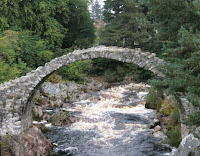
My Grandfather was very wealthy. His business was selling cotton and wool fabric to the automakers for car seats. When my father took it over, Grandfather spent his afternoons in Palmer Park at a long picnic table where he and other old men played cards. Grandmother didn't care for these men--they didn't own businesses. She convinced him to move to the suburbs when Detroit went through the change. They bought that house near my school. Every afternoon Grandfather would drive across that narrow stone bridge, back to Palmer Park, and play cards with his buddies. When he was too old to drive and had no one to take him, he stopped going. He didn't like to talk about it much and his eyes misted over when did. I felt sorry for my Grandfather. He was lonely and I knew what lonely was.

Every summer for as long as I can remember my mother would pile her gaggle of chicks into her station wagon and drive to her home in Dubuque, Iowa where we visited my other grandparents. About every five years my father joined us. The trip was two full days of air mattress battles, Dramamine, sour pillows, silly car games like 'My Grandmother's Cupboard' and heat...lots and lots of insufferable heat. My mother’s psyche usually burned out by Benton Harbor, about a five hours into the trip and we’d drag our sweaty and sugar coated little bodies into a hotel room for the night. Barring disasters like leaving a kid behind at a service station, it was another five hours of tangled torsos and tested tempers before our car reached the bluff and the majestic suspension bridge that took us across the Mississippi to Iowa. Grandma and Grandpa Hilvers were not rich. They shared their two story bungalow with my Aunt, her alcoholic husband and their three children. Adding our eight into the mix led to interesting memories but still, this bridge was one I recall fondly.

Happiness waited on the other side--days spent at Grandpa's river cabin fishing for catfish and smoking them. Afternoons spent jumping into the creek from the rickety bridge that took us to the cabin. We'd plunge to the swimming hole clutching a tractor's giant tire tube. No theme park ride could match the feelings in our stomachs.

Beyond and above this bridge was another--an ominous wood train trestle. Its massive timbers painted black with tar, it was at least four stories tall with a very narrow walkway flanking one side for workers to access the rails. The very presence of this bridge sweat danger. We were forbidden to go near it which only meant that when we got caught Grandpa would take us to the smokehouse and throttle our behinds. A number of shirtless, shoeless trailer boys who lived at the edge of Grandpa's property took great amusement from daring us to walk this trestle. They'd lead us to it like sheep then sit in their rowboats and watch and for many summers we never made it to the other side, certain we'd heard a train's whistle in the distance. I'm not sure whether their dares or Grandpa's threats released more snakes into our stomachs the day we finally made it all the way across.

I’d all but forgotten about my childhood bridges until my three grown daughters set out to start their own lives. To visit I’ve had to cross the Chicago Lake Street Bridge, the Brooklyn Bridge and Boston’s Longfellow Bridge. But I have no feelings of apprehension or loneliness when I cross these bridges. I know when I get to the other side there is always someone I love waiting for me.

I walk my three dogs along a river now--the same one that flowed behind the home where I grew up. With enough practice I could probably cross one of the many logs that have fallen across it. But I don’t need the challenge any more. I’ve married and raised three daughters and along the way learned to appreciate life’s simpler solutions, so I use the wooden footbridge.

Besides I am not as lonely now. Maybe it was knowing those bridges that helped.

Monday, November 9, 2009

Monday Musings--Designer Gowns and Journalists

Two good things in the NYT today. Both are upstarts that have thumbed their noses at this economy. The first that caught my eye is a company that is Netflixing (is that a word?) designer gowns. Called 'Rent the Runway', it intrigued me because, first of all, I am inherently frugal (some would call it cheap) and, second of all, because I've always been a tad envious of women who can carry off wearing one--both the expense and the savvy of it. The rental prices range from $50 to $200 plus $5 for insurance. With the holidays coming into view, I just might try this. Maybe once I wore a designer gown to a party that would be enough--I would be disappointed enough in the results that I would shift my envy (seems like the grass is always greener somewhere). I guess my only concern is whether the thing ( you have 4 days to keep it) fits.

So the second upstart is in Texas--called the Texas Tribune. It is an online news organization that has set its sights on monitoring news and policy coming from Austin. The non-profit (what news organization makes one anymore?) has already won financial support to the tune of 3.7 million dollars and is well on its way to making a fresh sustainable mark in the decimated world of journalism.

“I began to see journalism as a public good, like national defense or clean air,” said John Thornton, an Austin venture capitalist who has invested $1 million of the $3.7 already put up for the project. The theory is to pay good journalists well for serving their readers with healthy, clean portions of news.

Not too shabby.

Tuesday, November 3, 2009

You Say Goodbye and I Say Hello

Today Susan Dominus, in her BIG CITY column of the NYT, speaks to a topic never far from the lips of writers lately--the demise of the literary world as we knew it. She wraps her column in Joan Didion's famous essay, "Goodbye to All That," which as "an elegy to the passing of youth," talks to Didion's disenchantment with New York City and the literary culture that was her world. Written in 1967, Dominus writes that the essay still strikes many familiar chords.

Part of what has disappeared, Dominus says, is the "glittering, gluttonous self-indulgence" of the publishing business. It was a comment that struck home to me as I had been privy to the same self-indulgence by Detroit's corporate world back in the mid-eighties. As a florist, I was often hired to perform extravagant botanical feats for the conference and party tables of the executives--feats that often added up to $50 to the per-person tab picked up by stockholders and ordinary citizens. God only knows what the rest of the bill totaled.

It was, and is, the crux of our economic woes. The rampant wanton greed of the people in charge--often at the expense of the people at the opposite end.

Dominus comments that at least "The New York magazine and book-publishing scene is no Detroit." (How unfortunate that Detroit has become the metaphor for abject failure.) But, she goes on to mention the silver lining of all this. "People will keep making cars, only somewhere else; people will keep making literary culture, just not at the same scale, or in the same hallways, or for a living."

In part, I disagree. To the wanton greed I say, with relief, "Goodbye to All That." But unlike Dominus, who concludes that "even the most jaded among our ranks are not ready to say goodbye to all that," I say I am. and I am ready to welcome the era of the internet that will hopefully put more commercial endeavors on an even plane so that the executives and the foot soldiers are equally rewarded. The essence of cars--transportation--will not disappear; and the essence of literary culture will be just fine. People, by their very nature, crave to tell and read stories, to fantasize, to learn and to opine. So while the paper industry and the bookshelf industry might suffer, the new scene--the internet and the electronic media--will enable literature to thrive on an equal, if not larger, scale and it will be possible to make a living providing it. We just won't be able to gorge on the pocketbooks of the general public like we used to.

In November of the same year that Didion published her essay, the Beatles released their hit song, "You Say Goodbye and I Say Hello." Paul McCartney's summary of his lyrics was this: "The answer to everything is simple. It's a song about everything and nothing. If you have black you have to have white. That's the amazing thing about life."

That sums it up better for me. Life goes on and what we are passionate about will survive--might even get better!